Why You Need a Team for Your Mind, and What Each Coach Does | At Your Best in the AI Era, Part 6
Dr Jon Finn draws on his years in elite sport to argue that being at your best is a complex problem and so needs a team. He walks through the Habit Mechanic coaching team and what each specialist does in the 3·6·9 System.
Achieve more.
Find out which of the 6 habits of high performers is holding you back — free, in about 90 seconds.

 #1 BESTSELLER
 #1 BESTSELLER


In this episode
- Elite clubs surround each athlete with specialists because physical conditioning is complex, and Dr Jon says teams solve complex problems better than individuals.
- Most people cannot hire a team for their mind, because it is costly and psychology has fewer specialist routes than physiology.
- Activate: three coaches build a strategic plan, analyse the habit holding you back and create a plan to replace it, taking about 45 minutes in total.
- Train and Measure: a morning coach plans the day around Brain States, an evening coach helps you switch off, and weekly reviews show progress.
Full transcript
Series Recap And Today’s Focus
Hello, Habit Mechanics, Dr. Jon Finn here. I hope you're having a great week so far. Welcome back to our sixth episode in the Be It Your Best in the AI era miniseries. So we've covered how our brain works, why it's more difficult to get it working well than ever before, and how disruptions from AI is playing a role in that, plus what AI can actually do.
Um I've introduced the three, six, nine system, the three brain states, the six habits, and the nine action factors. And in the last episode, we pulled that together to show how that system really is a tool that helps your willpower to keep HUE nice and calm and happy, so that your willpower can actually help you to do the things that you want to do, including build the new habits, the new automatic and semi-automatic ways of thinking and doing that allow you to be at your best.
Now, I want to talk about how you actually do it.
Elite Sport Data And Performance Teams
Before I go there, I want to go back to the beginning of my professional career. So all I have ever done in my professional career is work in elite performance. That's been my job. So from leaving my master's degree, I was very lucky. I got a job straight away working for a company called Prozone. They were uh a leading sports analytics company who were the product we had was um we would analyze uh football teams and also rugby teams, live matches, so we would measure how far the players were running using trigonometry, how quickly they were running, uh so like how many sprints they did, what distance they did, all this kind of stuff, and then the we measured the tactical data as well, so how many passes they made, but how many short passes, how many long passes, how many tackles, how many throw-ins, how many corners, how many did you win, how many did you lose, all this kind of stuff.
So we provided this data package to the backroom staffs of predominantly Premier League football teams, um, so that they weren't just working off their own notes or their own opinions about the game, they could actually see real data, and that was connected to the broader move to professionalized um what I'd call physiological development of their athletes. So professional football teams were starting to, and if you're in the US, when I say football, I mean um soccer, which is actually an English word, but we tend to use the word football, although we also talk about rugby football union, which is also very confusing, and then you have American football, so anyway, that's another conversation, but um in um professional football, they were seeing that um that getting serious and getting professionally organized about how you developed your athletes was a significant performance advantage.
So if you get your athletes stronger and faster and more physically robust, then they were able to perform better on the field, perform more consistently, get less injuries, be available more consistently. And of course, this wasn't just happening in the UK, it was of course happening in in the US as well, and uh in other uh parts of the world where sports science was growing as a discipline, and I suppose was one of the first cohorts to study that at university when it was when it was becoming more of an established idea.
Um and they were running degree programs in in sports science for the first time, and when I went to working these for these teams, it wasn't just me, I was working with a team of people. So, what teams were doing is they were putting teams of people around their players because they started to recognise that getting physically uh fit enough or physically conditioned or optimally physically conditioned to play an a 90-minute uh soccer match or an 80-minute rugby match, it was difficult, it was complex, there was a lot to it.
So you didn't just need one fitness coach, you needed a nutritionist as well, and then to um manage injuries, you needed a physiotherapist, and you needed a pre-habilitation coach as well. We had pre-habilitation specialists coming into the clubs I was working at. Um and then you needed sometimes you needed a biomechanist to work with players to optimize certain movements and actions, and these departments got bigger and bigger and bigger, entire teams of people working with the athletes just to optimize their physical development.
Because when a comp when a problem is complex, like getting someone optimally fit to play eight uh 90 minutes of of football in the Premier League every other, well, probably in in peak season, it's like every three days, that's a complex problem to solve, so you need a lot of people around the problem to solve it. Teams are designed to solve complex problems, teams, human teams, are better at solving complex problems than anything else we understand, and that's why we have teams because multiple brains working really well, collaborating on a problem, can solve the problem faster than just one brain working on it.
So the COVID vaccination wasn't solved by one person, it was solved by teams of people, and every uh innovation that we've had as a species
Why Being Your Best Is Complex
has been solved by a team of people. Being at our best consistently is a complex problem, it really is. You can read a book that tells you it's easy, you can speak to a coach that tells you it's easy, just do this. It isn't, it's the most complex thing we understand because our brains are complex and the world we live in is complex.
Just getting our brains working well isn't more difficult than ever before. So that's why when we've had our most successful projects um supporting uh teams, supporting individuals, there hasn't just been one person involved, there's been an entire team of people involved. Um, people designing the interventions, people um delivering the program on the ground, uh training the support, like the families of people that we're trying to help in the methodology so they can support uh you know in the home life, etc.
But for most individuals, hiring a team of people to help them to be at their best just is not an option because it's too expensive and it's too complex, and because uh psychology and coaching are quite new disciplines, they don't have the level of sophistication in terms of you when you go when when you if you want to study psychology, you kind of do a general degree in psychology or a general degree in a in a certain area.
It's not like in physiology where it's much more developed and sophisticated, where you can do very specific trainings to understand very specific systems in the body and to become an expert at optimizing that system, hence back to the a professional sport now. There are teams of uh analysts, nutritionists, strength and conditioning coaches, sprint coaches, um uh hydration specialists, sleep specialists.
It goes on. There are honestly these teams of people that are working just around one individual, but it's on the physiological development.
AI As Your Affordable Expert Team
So this is why for me, neural network is neural network AI is so exciting because it allows us to give people their own team of experts that can help them to be at their best at an affordable price that isn't overwhelming in the sense of you need to have four one-to-one coaching appointments every day. So Habit Mechanic is essentially your own dedicated team of coaches and analysts that are available to you 24-7, and in fact, they're working for you 24-7, whether you know it or not, because they are they are working to understand how to help you to be at your best.
Um they are piecing together the picture of what is what is going on in your day so that you can they can better support you to have the more of the days that you want to have more consistently. And I want to talk through what the team does, specialist by specialist. But the first thing I want to say is that the 369 system, you don't need to worry about it because the team is trained to become is to be an expert on it for you to embed it into your life.
So if you want to put the 369 system into your life so you can optimize your brain
The AI Edge Psychological Assessment
states, then that's what Habit Mechanic is for. Uh and by optimising your brain states, that's gonna be the key to being healthy, happy at your best. So, and anyone can go in and just start doing what I'm gonna talk about for free because you can take a free trial of the system. So, the way we set up Habit Mechanic is first of all, you take your AI edge psychological report, and we've um since we first launched this, we've collected more data and we've beefed it up, and now it's I mean, I've trained on quite a lot of psychometric tools.
I haven't seen a better psychometric tool than at the AI edge psychological assessment. If you're taking those assessments professionally, you'll be paying hundreds of pounds to take them. This is completely free, and it's really quick, and it's quick because we've got a lot of data and we can see patterns just by asking minimal questions. So you take that AI edge psychological assessment and it predicts what your brain state profile is, but it also predicts what your strongest of the six habits are, and what your weakest of the six habits are, in other words, which is the habit that's holding you back.
You may be aware of it, you may not be aware of it. Um, but it's great to just see what comes out in the report, and the report is really in depth and it breaks down each of the six areas for you, and it and it talks about each of the six areas, and essentially what we're doing is we're we're taking the information about what you say you do, and we're reverse engineering that because we know if you do certain things in your life, you'll get certain outcomes, and if you don't do those things, you'll get certain outcomes.
Um, and what we've seen so far that over 90% of the time, the thing that um the the weakest habit people actually agree with, they
say,
Yeah, that's that's the thing. Sometimes people want to change their focus, or sometimes it might flag motivation as your weakest habit, and you might say, Well, that's not not what I'm experiencing. So you switch it to confidence or whatever. That isn't the point. The point is that we're going on a journey to understand ourselves, and the AH psychological assessment is the first step.
So you go in there, take it, and also um what then happens is it it creates a programme for you. So depending on which area you want to take you want to work on, because you can only work on one area at a time, and as we've discussed over the course of this mini series, excuse me, every all of the six habits are interconnected.
So by working on one, you're indirectly benefiting the others. So the report shows you you know the neural network pathways that are being affected, what you're actually training in your brain, what you need to train instead, and it creates a plan for you. Uh, we call it a prescription. So if you want to work on stress management, it creates a stress management prescription for you.
Um, and then it shows you how you work with your with
Why Generic AI Coaching Fails
your team to improve your stress. So the way we've designed the team is and remember you can just go and do this for free. You take a free trial, and if you like it, you can keep using it. Um the way we've designed it is we I've I've seen quite a few sort of um AI coaches for want of a better term.
And what I've seen is they're not very good. And they're not very good because one they're trying to be an expert in everything, and they they can't be, so they just end up giving you generic tick tips, tricks, and hacks, a bit like a a mediocre coach would give you, because that's what they're being trained on, they're just being trained on what cut what mediocre coaches are trained on, and then of course, just getting a few insights about what you might do differently doesn't change your behaviour.
So we knew that if we wanted to create something really powerful, we had to have specialists in the system, just like um in sports science, you have specialists for different areas of physical development, like I've been talking about. So, and then we we wanted each of the coaches to be responsible for very specific parts of the um
Strategy Coach And The FAM Story
of the 369 system. So when you start working with your team, you're gonna first of all the first step is to activate the nine factors because if you get the nine factors set up, that makes it easier to manage HUE to keep HUE calm, to keep HUE happy, it means that you use less of your um willpower resources on managing HUE, but you don't need to worry about setting up this the nine factors because the coaches do it for you.
So the first coach you meet is your willpower and strategy coach. So you may recognise that stress is what you want to work on, or confidence, or performing under pressure, or sleeping better, or becoming a better leader, whatever it is, but you're not gonna get there, you're not gonna improve it efficiently and effectively if you don't have a strategic plan that you're working towards.
So we know the power of intelligent goal setting, and we've created the cornerstone tool that we use to do intelligent goal setting is called the future ambitious meaningful story, and we also have a uh a leadership version of that tool. But as powerful as the future, ambitious, meaningful story is if you wanna set one up really well, it takes you about half a day.
Because it's a very thoughtful exercise that takes a lot of time, you've got to sit down, you've got to go through it with your best brain power, you're gonna edit it, you're gonna revise it, and then even then, if you dedicate the time and the brain power, you might not get it quite right because you might not interpret everything properly.
So we've seen that it's easiest to help people create fam stories, you know, in live sessions where they've got a one-to-one coach working with them, where the people can ask questions and they can get expert guidance, but even then, it takes a good two or three hours to get a really good one set up. The motivational strategy coach can create your fam story for you just by you answering a few simple questions.
It does it in four 10-minute sessions. You don't have to write anything down, you don't have to make any notes, you just tell it and it creates it for you, and it creates it for you in such a way that when we come to update and review it, we recommend every 30 days. You can literally do it in five minutes, sometimes in less than five minutes.
So, one of the things I used to dread doing was updating my fam story because it just took not because it's not beneficial, it's because it takes brain power, and our HUE always puts off things that don't give us immediate rewards. Now I literally can do it in under five minutes, and it's it's amazing. So you just reset your motivation um in under five in under five minutes once you've done those four initial sessions.
So your four initial sessions with the motivation and strategy coach, set up your fam story so you have this really powerful strategic plan connecting your distant future back all the way to today. And again, the beauty of working with this neural network AI that is powered by our proprietary technology and our proprietary uh large language model is that you don't have to have all the answers because it it understands this process and it understands how to make it super easy for you to get to where you want to get to.
Um so you don't need to know how to do it, you just follow the instructions, you don't need too much time to do it because you do it in short little 10-minute blocks, and then you don't really need much brain power or mental energy to do it because the coach is is providing the high charge brain power, so it's really really powerful tool.
Um once you've got the strategic plan, your personal strategic plan, the motivation and strategy coach then passes that plan on to your next expert, your next specialist, which is the willpower analyst.
Analyst And Habit Builder Plans
Now, many people have created great fam stories and they've said they set off with the best intentions, but a fam story doesn't help you to dismantle the destructive habit that's holding you back. So, what we do with willpower analyst is we go deep on the specific habit that we want to improve. So, with the fam story, with the motivation strategy coach, we we have a clear understanding of why we want to work on this habit, why it's going to be beneficial for us this week and next week, and then in 10 years' time to help us to actually live the life that we want to.
So we can be healthy, happy, and happy in the distant future. But the reason that we have unhelpful habits is because they're run by our subconscious. It's not that we don't want to get rid of them, it's just that we don't know how because we don't really know what's driving them. So Willpower Analyst is an expert in your subconscious thinking patterns, and it knows the brain's operating rules, and it's an expert on how HUE operates, and how HUE is silently reinforcing this subconscious pattern that is undermining your stress or your confidence or your leadership or whatever it is.
So you work with your willpower analyst and it creates a habit analysis plan for you, and that will get you thinking about the unhelpful habit that you want to work on in a way that you've never thought about it before. I actually did an analyst session yesterday because something was had really annoyed me in the day. Um I noticed myself dwelling on it, and literally within three or four minutes, I just completely put the the issue to bed, so I wasn't carrying it around with me anymore because my brain was you know HUE was in control, so I couldn't quite see the problem, but just by speaking to the analyst it made it absolutely clear, and it's worth pointing out that um the kind of work that you would do with the motivation and strategy coach, if you were doing that with a human being, it would cost you between five hundred dollars to two thousand dollars, that kind of work because human labour is expensive and neural network AI isn't expensive, and then the same with the um the analyst, the willpower analyst is doing the job of a performance psychologist.
So if you're gonna do the kind of session that you did with uh with the analyst, it probably costs you somewhere between $350 to over a thousand dollars. These are market rates that we've we've looked up, but obviously we understand what coaches charge because we we sell coaching and we are coaches, no, we train coaches, so each of the team members is designed very specifically to do the job that you'd otherwise have to go to a very specific expert to get to get done for you.
And each of the coaches, you don't just have a chat with the coach, it produces an asset for you, a report, a plan, so that every other team member understands what's going on with you in that particular thing, and then you can come back to it, and it does it for you, you don't have to write it down, it's just doing it for you.
So that's another one of the unique aspects of Habit Mechanic. So you've got your strategic plan, and our the metaphor that we have for the fam story is it's like an iceberg. The top of the iceberg is the distant future, the bottom of the iceberg is the here and now, and the here and now is where that unhelpful habit lives.
So the work you do with the analyst is you understand it in more detail, you understand what's really going on subconsciously, and essentially what story you're telling yourself, or your subconscious is telling yourself about this specific problem. Then what happens is your willpower analyst passes on the plat, passes on your habit um analysis report to willpower habit builder, and what willpower habit builder does, and it kind of does the work of a behaviour change specialist that again would chart would charge you a lot of money for a session like this, it builds what we call a habit building plan for you to help you to build a new habit to replace this current habit.
So if you're managing stress, it helps you to build a habit, so you're not practicing being stressed, you're practicing managing stress and de-stressing as a as an example. If it's a confidence habit, instead of practicing worrying and beating yourself up all the time, you're gonna practice a habit where you're speaking to yourself in a much more helpful way consistently.
But willpower habit builder is an expert on the nine action factors, so it just asks you some very simple questions, but by answering those questions, it's very deliberately creating a plan for you so that all the nine factors are going to be working for you instead of against you. Because right now, if you've got a stress management problem, the nine factors are working for the stress management problem.
They're on HUE's' side, they're helping you to make you more stressed more consistently. So again, five to ten minutes, you get a will, you get a habit building plan, and those first three coaches, they take you working with them will probably take you about 45 minutes altogether. They activate the nine factors for you in combination, and that's the setup done.
That's that's the hardest bit, but it's not really hard, it's a pleasure because the coaches just do it for you and they create the assets for you. So it's not like a coaching session where you have a good chat, leave you good intentions, but often fail to put things into practice. You um you get these assets, and then your Habit Mechanic coach also understands this as well.
So if you if you want to work with a human in the loop, as as as they say, you can you can work with an expert Habit Mechanic coach if you want, but they then also have this information, um, not your deep analysis, but they can see at a high level what you're planning and what you're what you're working on, and they're and they can support you better in the the sessions where you work with them.
But some people want to work with a coach, a human coach, as well as this, others don't. But we have uh many of our coaches now using the system with their clients really successfully, um, but we're finding that the frequency with which our coaches need to have um human-to-human sessions is decreasing because people are getting better results because they're they're um working on themselves more consistently because they're using Habit Mechanic.
So I just wanted to mention the human coaching asp aspect there. Um so that's the first three team members. You've got the motivation and strategy coach, willpower analyst, and willpower habit builder. And by just doing about 45 minutes of work with those coaches, you've got the nine factors activated
Daily Brain State Planning
around you, then it's all downhill from here, it's easy. The next coach, then, and the next phase we're going into is the train phase. This is the daily practice. We get good at what we practice. The trouble is how we think also counts as practice, and the way that we think and talk to ourselves is often very unhelpful.
So, this is where the next two coaches come in. We have the brain state coach, we call it the brain state performance coach. So, in the morning, you work with your brain state performance coach. Your brain state performance coach knows what your big goals are, knows what your strategic plan is, it understands your habit analysis report, and it understands your habit building plan.
And your brain state performance coach is a central component of the habit building plan because this is where we're going to work on this new um behaviour that we want to build, like managing stress better, being more confident, being a better leader. The brain state performance coach again is super simple to use. It takes when you f the first time you use it, it might take um 10 minutes, maybe less, but now often for me, I just use it.
Maybe it takes me three minutes, and all you do is you answer a few simple questions, just um giving some information about how well you're doing your best, about your sleep night, your exercise, about your mental energy levels, just three questions where you've written yourself out of ten that gives the coach some information about what's going on, and it also builds a bigger picture that's that's building in the background, which we'll talk about later.
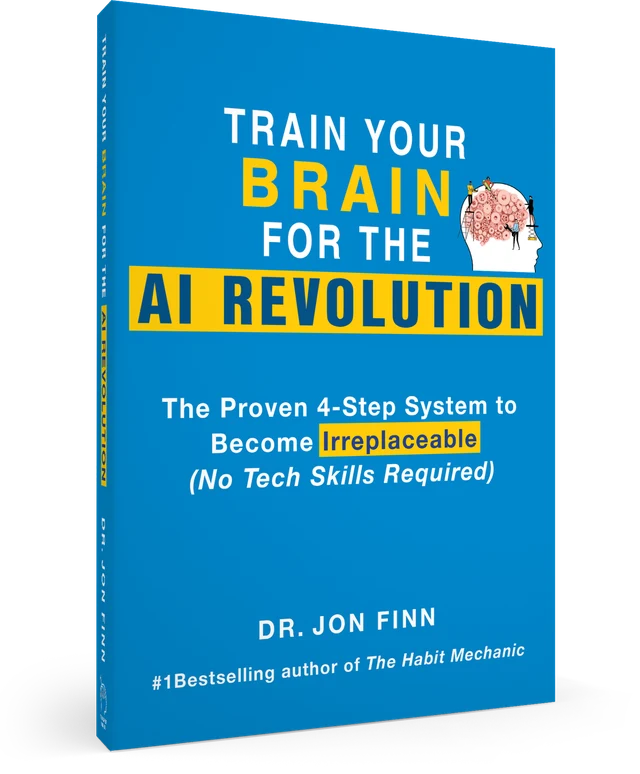
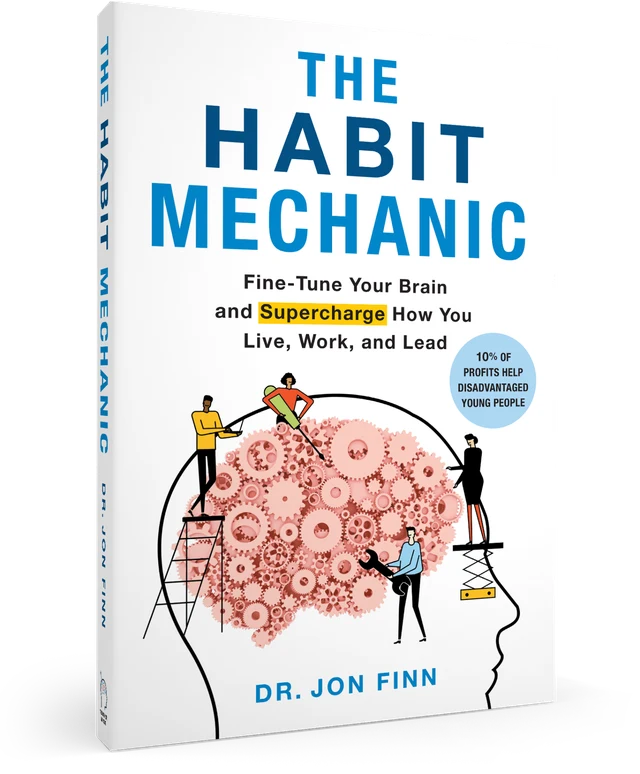
But then essentially, the brain state performance coach creates a willpower story for you. So, willpower story is a super powerful tool that I wrote about in the Habit Mechanic and also Train Your Brain for the AI Revolution, but it's difficult to do because it's complex and it's sophisticated and it takes mental energy. And to create a really good one, if you're just learning to do it, it takes you a good half an hour, and most people don't have that time or the mental energy to do it.
So now we've got the brain state performance coach where you can just do it literally in a few minutes in the morning, and just by answering a few questions, like what time do you want to go to sleep tonight? It works works backwards and it creates what we call a brain, a brain state plan for you. So it organizes your day and the things that you want to get done today into brain states.
That's a high charge brain step task, that's a recharge brain step task, that's a medium charge brain step task, all done for you, all worked out for you, and then it predicts it predicts ahead what's most likely to trip you up. So whereas if you're working on confidence, what in the day is most likely to challenge your confidence, and then it creates a mini, what we in our books call swap plan, self-watch plan, three-part plan.
Again, it just does it for you, so it's not requiring you to use any brain power beyond saying what you want to do and saying, yeah, that that plot that's what I want to work on, and it creates the plan and it does a few other cool things, but by the end of it, what you get is your day planned around your brain states, then you also get a brain state tracker, and then a mini plan to help you to overcome the likely challenge that would otherwise lead to you practicing the old behaviour that you're trying to reprogram, so it's it's so good.
Um, and this is all based on activating the neocortex. So if we just spend a few moments every day activating our neocortex in a very specific way, in the way that the the brain state performance coach is is um designed to do, then just those few minutes of of planning they carry with you throughout the day. Um and essentially that's like having a set a coaching session with um a cognitive performance coach again that would charge you anywhere between I'd say $350 to even up to $1,500 for one session.
That session would be an hour. You probably wouldn't get a plan when you left the session, you may feel better momentarily, but now you can just do this in a few minutes on your phone or on your on your desktop and you get the plan that sets up the rest of the day for you.
Nightly Recharge And Building Super Habits
And then at the end of the day is the recharge coach. So the recharge coach knows what your plan was, and it's designed to help you to process the day, to process stress, to build confidence. We often finish the day thinking about what didn't go well, how tired we are, sometimes how useless we are, how rubbish our life is.
The brain state of the recharge coach is designed to help you to process the stress and build your confidence. So again, you just tell it what's going on, and it processes it all for you, it records it all for you. Then you're building this daily practice of just five to ten minutes in the morning, and then three to five minutes at the end of the day, where you're building what I would call super habits that allow you to build any other habit that you want to build, whether it's better stress management, better confidence, better leadership, better focus, better uh sleep.
So it's so so powerful. I've been doing this for a long time, and I I have never been um at my best more consistently than I have been whilst we've been developing this program because I'm using it every single day, um, it's so so powerful, and you can try it for free. So then you've activated the nine factors with the motivation coach and your willpower coaches, you're putting this into practice just in about 10 minutes a day, that's all it takes.
Um, and again, it's worth pointing out that if you are gonna have a coaching session at the end of the day, let's say with a resilience and recovery specialist, again, that would cost you somewhere between $250 to $750. You spend an hour, yeah, you'd feel better at the end of it, but that's expensive and it's not practical to do that.
You get exactly the same benefits, and I would argue much, much more just in a few minutes by working with the recharge coach. Um, and we're seeing data from real users showing that their stress levels are dropping significantly. We're even getting people who are telling who are because they're monitoring their heart rate and things with their wearables, that their average heart rate is significantly dropping in a good way.
So these things may sound simple, but they're highly complex and they've taken a long time to understand how to help people to achieve these outcomes. Up until now, they were only deliverable by human beings. Now we're able to deliver them with um technology that's in your pocket 24-7. And if you want to put a human coach in the loop, you can do that as well.
Who then what what I like about how our Habit Mechanic coaches are able to work now is there isn't the pressure in a coaching session to have to show your client how to create a willpower story or do a fam story or whatever, it just creates more space for our for our expert Habit Mechanic coaches to actually listen and to um give give the human insight, do just the human role, not have to do the planning um and all of the behaviour change role just in one hour every other week or something like that.
So this is such a powerful combination. So then we've activated the nine factors, we've we're doing our daily work, and I I do this on my days off as well because planning your day off with a brain state coach, you're gonna get much more if you want to recharge, switch off and relax, this will help you to do that.
Um so for me, this is a game changer, not just on work days, but also switching off and relaxing as well. But you don't have to do it every day, it's entirely up to you. Then what we have is at the end of the week, your performance
Weekly Measurement And Review
analyst. So this is the measurement piece. So we activate train measure, we're now looking at measurement. Your performance analyst is working in the background. You never work with your performance analyst directly, but it's working in the background and it's pulling together all your data, and it shows you every week a report about how's how it's going. So you don't have to guess if you're making progress or not, you can see it.
And then also once a week, we have the weekly performance coach, so it's bridging that gap between your long-term strategic plan and your daily brain state coach. So once a week you zoom out from the week, you look at your 30-day plan from your big strategic plan, you look at what you achieved last week, what you didn't achieve, you reset, you go again, again, done in a very structured, intelligent way, and all recorded so that just I was just looking at mine before.
You can just quickly glance at your goals, and they're not they're not just normal goals that we set for you. They're um what I'd call Habit Mechanic goals, they're very they have some real powerful nuances in them, so you can keep a track of what's going on, uh, update them whenever you want to. So you have this end-to-end system of not only having a sense of where you want to be and how you want to be feeling in 10 years' time, but bringing it back to today, and then updating that plan every um every week and then every 30 days, and that's the system, and again, yeah, you could have a coaching session at the end of the week if you wanted, but it's time consuming and it's expensive, and most people don't have the time or the money to be able to do that, and that's what that's what we built Habit Mechanic for.
So, for the first time ever, you can have your own team of dedicated coaches and analysts working for you, and not just read about the ideas from the Habit Mechanic and Train Your Brain for the AI Revolution and try some of them and get a bit of success, but ends up being a bit inconsistent because you forget and you fall back into your old habits.
This is with you all the time, um, and it's literally giving you thousands, if not tens of thousands, worth of expert support every month for really what uh some people spend on coffee in a month. It's it's really, really phenomenal. Um, and it also means that our coaches can work with their clients in a completely different way as well.
So for me, there's a lot of hype,
AI Hype Reality And Next Steps
a lot of noise around AI. Is it good, is it real? We've been using this technology seriously now for over two years, and it's phenomenal. It's a phenomenal technology. We've known for well since we first started to use it, that this potentially can be transformative for people's lives, uh, not just in terms of helping them to get their work done um faster, but for them being healthy, happy, and at their best more consistently, and that's what Habit Mechanic is not only designed to do, but it's proving that it does that.
Um so it's so exciting. So if you haven't already, I'd recommend go take the AI psychological report. If you took that um any time before this week, I'd recommend go look at it again, go update it because there is um there's a new level of analysis that we've added to it, and then it gives you your your program, and then you can start working with your coaches for free.
And if you like it, you can continue. So, well, I'm really looking forward to going on this journey with you. I'm going to be talking a lot more about the three brain states, about the nine action factors, and also about the important role of teams in helping us to be at our best. Um, but I'm just so excited to hear how this is actually helping you to be healthier, happier, and at your best because we we're getting lots of people giving us amazing feedback so far.
So I'm looking forward to hearing more of those stories. So I hope you found the this mini series insightful and yeah, one simple thing to do go to habitmechanic.ai and uh do your assessment and have a go with the team. So explaining it could I I appreciate it can make it sound more complex than it is because it isn't particularly complex to use.
Explaining it is complicated because it there's so much complexity in it, a bit like um you know, all of our approaches, but we we make them very simple to use ultimately. So so yeah, go have a go and let me know how you get on.
More episodes
Ready to perform at your best?
Find out which of the 6 habits of high performers is holding you back — free, in about 90 seconds.
#1 BESTSELLER#1 BESTSELLER